
When looking for a camper to rent or buy, the market offers so many varied options that it is hard to know where to start. Manufacturers highlight features that sound good in brochures but are not always explained in practical terms: what actually makes a difference on a real three-day trip? What can you do without if the budget is tight?
This guide breaks down the five most important dimensions of a modern camper: thermal insulation, energy management, interior layout, bathroom and shower, and connectivity. Without excessive jargon, focusing on what really makes a difference when you travel.
Thermal insulation: the foundation of comfort in any season
- Good insulation regulates the interior temperature without constantly relying on heating or air conditioning systems. In modern campers, the best insulation combines injected foam in the walls, double-glazed windows and floors with a thermal layer.
- In practice, the difference between basic and good insulation is felt most on cold autumn or winter nights and in very hot summers.
- For weekends in Catalonia or coastal areas, standard insulation is usually sufficient. For longer trips or mountain zones, it is worth prioritising campers with quality insulation.
- A simple indicator: if the camper is certified for use at below-zero temperatures, the insulation is good. If it only states a minimum operating temperature of 5 or 10 degrees, the insulation is basic.
Energy management: battery, solar and real autonomy
- The service battery is the heart of a camper's energy system. Lithium batteries (LiFePO4) have progressively replaced lead-acid in modern campers because they offer more charge cycles, deeper discharge capability and less weight.
- A 100-150 W solar panel on a weekend with good sun is enough to maintain a 100 Ah service battery without needing to connect to mains power.
- For longer trips or during low-sun seasons, a higher capacity battery (200 Ah or more) or the option to connect to external power makes the trip much more comfortable.
- Real consumption: fridge (the biggest consumer, 30-60 Ah/day), LED lights (very little), device charging (little), fuel heating (little electricity), air conditioning (a lot — usually requires mains connection).
Theoretical vs real energy autonomy
A battery's nominal capacity and real on-the-road autonomy do not always match. A 100 Ah lead-acid battery should not be discharged more than 50% to avoid damage, so its real useful capacity is 50 Ah. A 100 Ah lithium battery can safely discharge to 80-90%, so its real useful capacity is significantly higher.
Interior layout: using space intelligently
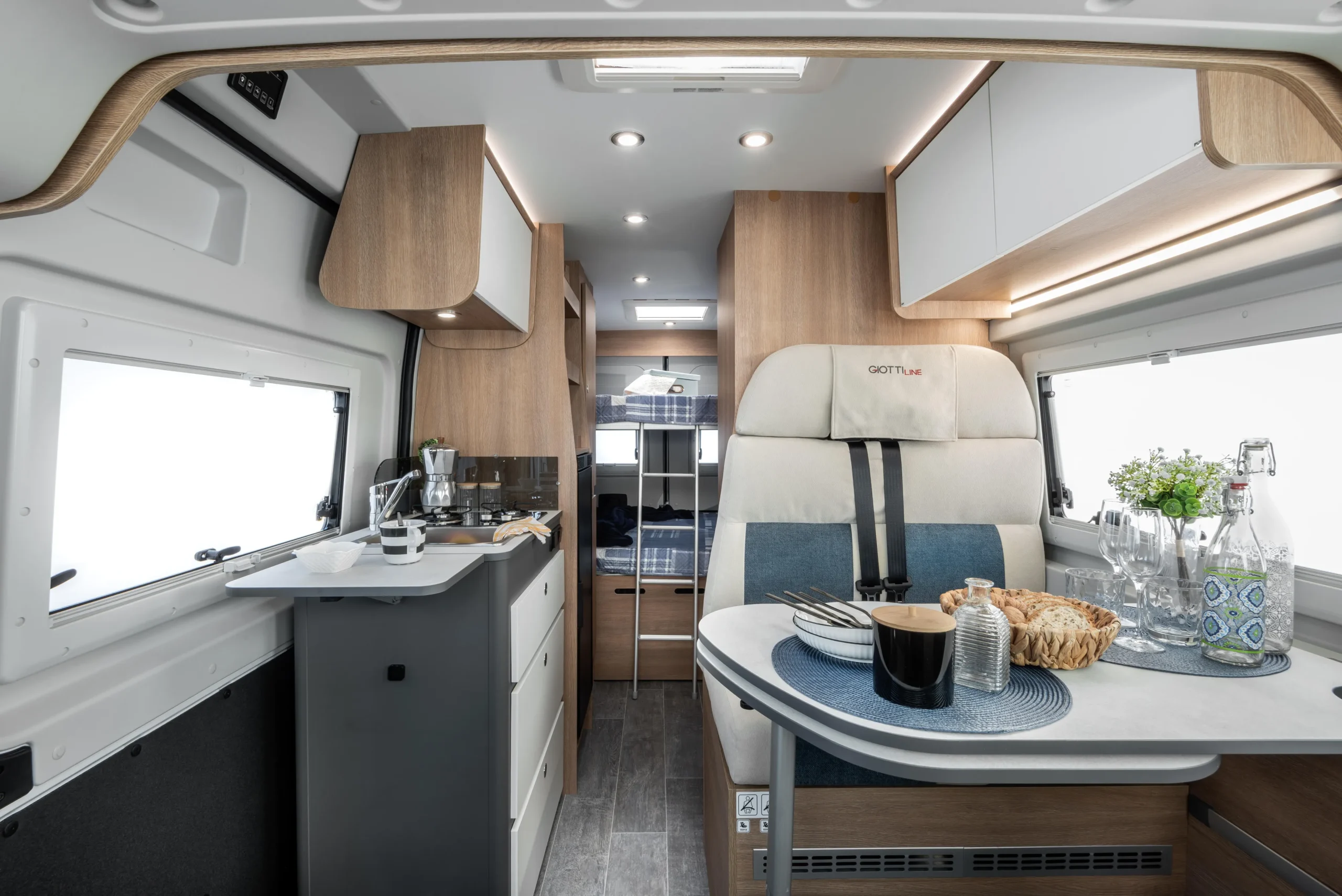
- A camper's interior layout directly affects how comfortable the trip is. The most valued designs combine a fixed bed accessible without moving anything, a functional kitchen area and space to sit and eat inside.
- A longitudinal fixed bed at the centre or rear is most comfortable for two adults because it eliminates climbing over your companion in the middle of the night. A transverse bed gains width but requires stepping over the other person.
- Storage space: think about how many days you travel and for how many people. A camper for two people for ten days needs space for clothes, food, technical gear and activity equipment.
- Modular or reconfigurable furniture solutions (sofas that convert into an extra bed, folding tables) add great versatility in small spaces.
Bathroom and shower: what really matters on the road
- Modern campers typically offer three bathroom configurations: integrated compact bathroom (WC + shower in the same space), separate bathroom with exterior shower, or exterior shower with separate interior WC.
- For short or weekend trips, a compact bathroom is sufficient. For longer or family trips, a separate bathroom or dedicated shower area provides much more comfort in daily use.
- Water tank capacity (fresh and grey water) limits real bathroom autonomy. With a 70-100 litre fresh water tank, a couple of short showers a day are manageable without needing to top up every day.
- The exterior shower (usually at the side or under the vehicle) is very practical for rinsing feet after the beach or washing surf or water sports equipment without soaking the interior.
Manage water well and it will not be an issue
Water management is the factor that most limits autonomy on the road. Short showers (2-3 minutes), not leaving the tap running while washing hands, and emptying grey water regularly dramatically extends autonomy between service stops. At motorhome areas, refilling is usually quick and free or very low cost.
Connectivity: internet on the road without complications
- On-the-road connectivity has improved enormously with 4G/5G coverage in Spain. For most routes on main roads, using your phone as a personal hotspot is more than sufficient.
- Mountain areas, the Ebro Delta and some quieter coastal stretches can still have patchy coverage. Downloading maps and important content in areas with signal is the best habit to develop.
- Some campers come fitted with a WiFi booster antenna that connects to campsite or motorhome area networks from inside the vehicle.
- For working remotely on the road, a dedicated data SIM with a good monthly allowance and a portable 4G router is the most reliable solution for maintaining a stable connection regardless of campsite networks.
A camper does not need to be perfect for every scenario. It needs to be the most suitable one for the trips you actually plan. Prioritise the features you will use, not the ones that sound best in the brochure.
Summary: what to prioritise by trip type
Summer coastal weekend: standard insulation, compact bathroom, basic battery. Autumn mountain route: quality insulation, fuel heating, higher-capacity battery. Long multi-week trip: fixed bed, separate bathroom, solar panel, lithium battery. Remote working on the road: 4G router, large battery, inverter for laptop.
Useful resources
Frequently asked questions
What is the practical difference between a lead-acid and a lithium battery in a camper?
A lithium battery offers more real useful capacity (can safely discharge to 80-90% vs 50% for lead-acid), more charge cycles, faster charging and less weight. The initial cost is higher but over the long term it tends to be more cost-effective.
Is a camper without its own shower suitable for a weekend?
Yes, perfectly. For weekends or short trips where you plan to stop at the beach, a pool or campsite facilities, a camper without its own shower is very functional and tends to be more affordable. An onboard shower adds most value on long trips or in areas without nearby infrastructure.
What size solar panel do I need for an autonomous weekend?
For a weekend with the fridge running and device charging, 100 W of solar and a 100 Ah lithium battery are sufficient in good sun conditions. If the weekend is forecast to be overcast, or if you use electric heating, increase the capacity.
Are all the fleet models available with the features you describe?
The fleet evolves over time. Check the specifications of each model on the campers page to see the specific features of each vehicle: insulation rating, battery type, tank capacity and bathroom equipment.
Understanding the features that really matter in a modern camper helps you choose better and enjoy the trip more. Not every feature is essential for every trip: prioritise the ones that fit your travel style. Browse the available fleet and book the model that best suits your next journey.